
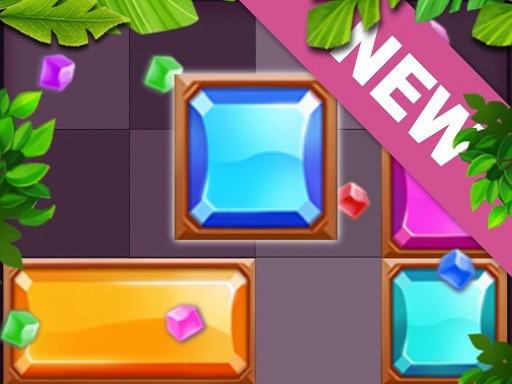
Placing Shapes on a Fixed Grid
Shape Slide Puzzle is built around a single, repeatable action: dragging a shape from the bottom of the screen onto a grid. Each shape occupies a set of cells, and your job is to find a spot where it fits without creating permanent gaps. The grid size is fixed, so the space you have at the start is the space you have for the whole round. That constraint is what makes every placement matter—there is no expanding board or extra row to bail you out.
Line Clearing and Scoring
When a horizontal line is completely filled with blocks, it clears and you earn points. The visual effect that plays on a clear is the game's main feedback loop, and it reinforces the connection between a well-placed shape and a reward. Vertical lines are not mentioned as a clearing condition, so the strategy centers on horizontal completion. Because cleared lines free up space, a player who clears consistently can keep a round going longer than someone who only reacts to a crowded board.
Reading the Board Before You Drag
The challenge is not speed but foresight. You can see the grid and the upcoming shapes, which means you can decide whether a shape belongs in a tight corner now or whether it should wait for a better opening. Isolated single-cell gaps are the main threat: they are hard to fill with larger shapes and they reduce the number of usable rows. Experienced players tend to work across the whole grid rather than stacking one side, because even distribution keeps more line-clearing options open.
Who This Suits
There is no time pressure, so the game works for short breaks and longer sessions alike. The drag-and-drop control is simple enough for beginners, while the planning layer gives puzzle fans something to think about. The bright, colorful style and clean interface keep attention on the grid. High score tracking gives solo players a reason to return, and the round ends only when the grid fills up and no shape fits.






Comments
0 comments