
What Players Actually Do
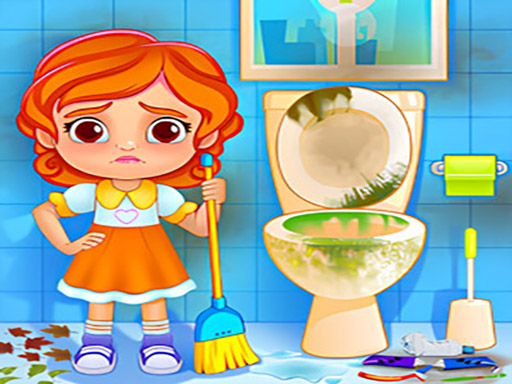
Kids Home Helper: Tidying Adventure is a point-and-click game built around household chores. Each room presents a set of tasks: scattered toys need to go into bins, dusty surfaces need wiping, beds need making, and clothes need folding. Players click or tap directly on the objects that require attention. On-screen hints indicate what to do next, so the game never leaves a child guessing about the next step. The interaction model stays consistent across every room, which means young players can apply what they learn in one area to the next.
Why the Game Avoids Timers
There are no countdown clocks, no penalties, and no failure states. A child can spend as long as they want on a single room or task. That design choice matters because it removes the frustration that often accompanies timed challenges for younger audiences. The reward structure relies on stars and positive feedback after each completed chore, which shifts the focus toward finishing what was started rather than racing against a clock.
Skills the Game Reinforces
Every task maps to a real household activity. Putting toys in a bin, wiping windows, and folding clothes are all actions children can recognize from their own homes. The game presents these chores as achievable and rewarding, which supports the development of responsibility and organizational habits. Parents looking for a low-stress activity that introduces helpful routines will find that the game's structure aligns with those goals without turning cleaning into a competition.
Controls and Accessibility
The control scheme is limited to clicking or tapping, making it accessible to children who may not yet be comfortable with complex inputs. Bright visuals and simple object highlighting help players identify what needs attention. Because the game uses a consistent point-and-click approach throughout, there is no need to learn new controls when moving between rooms. This consistency is a deliberate part of the design, not an oversight.




Comments
0 comments