
Shared Keyboard, Separate Roles
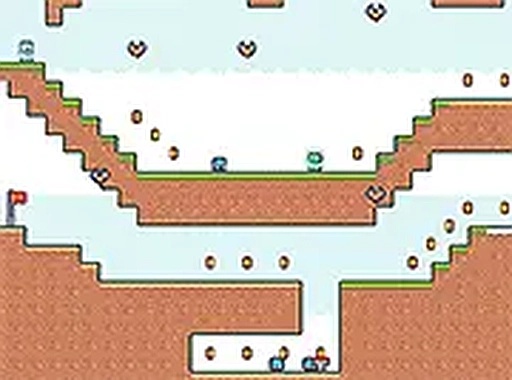
Two-Tone Team Quest puts two players on a single keyboard. The green character responds to one set of keys, the blue character to another, so both players sit side by side and talk through each move. This setup makes spoken coordination part of the core loop, not an optional extra. The controls are simple to learn, but executing them in sync takes practice. Players can swap roles between levels to keep the experience fresh.
Puzzle Logic and Timing
Each stage presents obstacles that require both characters to act in unison. One player might hold a switch while the other crosses moving platforms, for example. The game rewards clear communication and careful timing rather than speed. Success depends on understanding each other's movements and planning each step together. Later stages combine multiple challenges that demand precise teamwork, while early levels teach basic jumping and timing.
Progression and Accessibility
Stages gradually introduce new mechanics and hazards. Each level ends with a flag that both characters must reach to advance. The difficulty curve is gentle, making the game accessible to newcomers while still offering satisfying challenges for experienced players. Bright, clear colors distinguish characters and obstacles, and the green and blue figures stand out against the background, making it easy to track both players' positions. The simple art style keeps the focus on gameplay.
Session Design and Platform
Each level takes a few minutes to complete, making the game suitable for short play sessions. The cooperative nature means that replaying a level with a different partner can feel like a new experience. The game does not include a timer or score, so players can focus on teamwork without pressure. It runs directly in a web browser on desktop computers, with no installation needed, and a full-screen mode is available.



Comments
0 comments