
From Seeds to First Sales
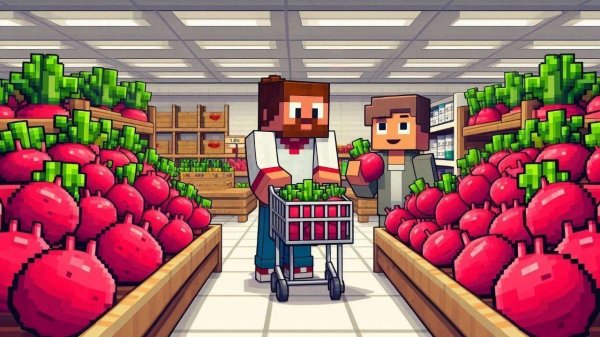
You begin with a small plot of land and a basic food stand. The opening tasks are straightforward: till the soil, plant seeds for carrots and tomatoes, and wait for them to grow. Those early crops form the base of your menu. Serving customers earns coins, which you can put back into the business. The plant-harvest-serve loop is easy to grasp, so players of any age can pick it up without a long tutorial. The blocky art style keeps the whole experience light and approachable.
Growing Your Farm and Menu
Once earnings steady out, you can buy more plots to grow additional ingredients. Building a small barn opens up animal raising. Cows produce milk and chickens lay eggs, which unlock recipes like creamy soups and baked goods. Each new recipe brings in different villagers, raising foot traffic and potential income. The game pushes you toward balanced resource management because you have to choose between expanding the farm or upgrading the shop first.
Keeping the Queue Moving
Customer satisfaction drives progress. A visible queue shows who is waiting, and you need to prepare their requested items quickly. Upgrading your counter speeds up service, while extra storage lets you hold more ingredients at once. You can also place decorations around the stall to make it more appealing, which seems to encourage villagers to return. The difficulty curve stays gentle, letting you master one system before the next one demands attention.
Watching the Stand Become a Hub
As your reputation grows, the food stall turns into a lively gathering spot. Cheerful character animations and bright colors reinforce the idea of building a positive space. The core loop stays focused on production and service, but the real sense of progression comes from seeing your small stand evolve into a busy market presence. It is a relaxing experience that rewards patience and planning rather than fast reflexes.







Comments
0 comments