
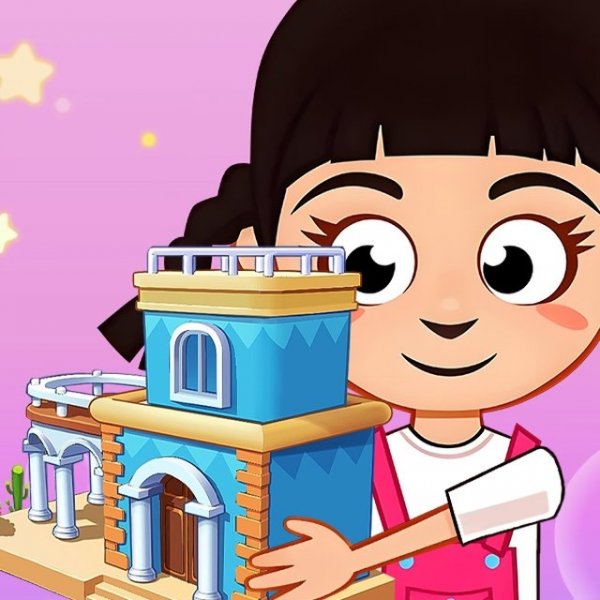
A Household Built for Young Players
Family Avatar Home Life Game places children inside a cozy, interactive home shared by a family of avatars. The player's role is to guide each family member through ordinary activities: preparing meals, tidying rooms, and spending time outdoors. Every action is performed with a simple click or tap, so the game remains accessible to toddlers and preschoolers who are still developing fine motor control. There are no timers, scores, or fail states. That design choice keeps the focus on exploration rather than performance, letting children move between rooms and activities at their own pace.
Meals, Chores, and the Rhythm of a Day
Much of the play follows a recognizable daily sequence. A child might start by selecting an avatar and choosing a task, such as picking ingredients in the kitchen or setting the table. After the meal, another character can be directed to sweep the floor or put items away. These tasks are not busywork; they model cooperation and responsibility in a context young children already understand. Because the game never forces a particular order, kids can repeat a favorite activity or skip ahead to something else. That freedom is the point: decision-making happens naturally as children weigh what to do next.
Outdoor Play as a Change of Scene
The garden area extends the simulation beyond the house. Players can move the family outside to a playground or a sandbox, where activities are recreational rather than chore-based. This outdoor space gives the game a second mode of play and a natural transition point. Parents and caregivers can use the shift from indoor tasks to outdoor play as a conversational cue about balancing work and rest. The game does not enforce that lesson, but the structure supports it.
A Safe Space for Role-Play
Family Avatar Home Life Game is designed as an ad-free environment, which matters for its intended audience. Young children cannot distinguish advertising from content, so removing ads keeps attention on the simulation itself. The warm, domestic setting and the absence of pressure or competition make the game a low-stakes way to practice familiar routines. It does not teach reading or math, and it does not claim to. Its value lies in imaginative role-play and the small decisions that come with running a household.








Comments
0 comments